
Satisfies 1 requirement
Multi-Purpose Lumber Timber Steel Coil Waste Handling Grab Truck Material Garbage Collection Industrial Grapple Dump Vehicle Wood Tipper Cargo Transporter
US$48,888.00-56,666.00
1 Piece(MOQ)

I have found results from30000+products and10000+suppliers aboutTimber truck


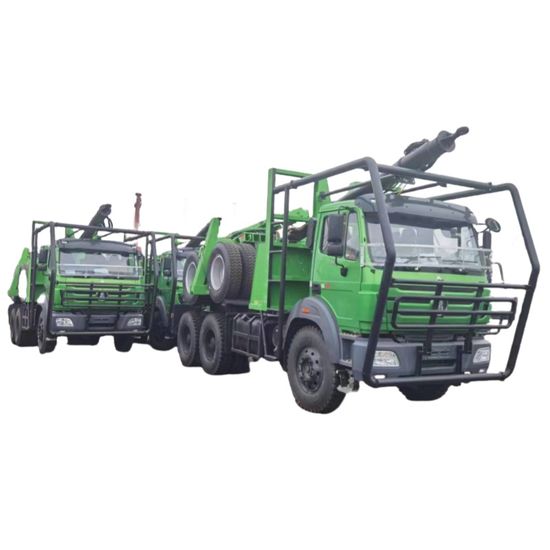


When procuring timber trucks, the engine horsepower (typically 400-550 HP) and torque are critical for navigating steep, unpaved forest terrains. Buyers must verify the chassis reinforcement, specifically looking for double-layered frames to handle high-stress loads. The crane capacity and reach (if integrated) should be matched to the average log weight, and the axle configuration (e.g., 6x4 or 8x4) must be chosen based on the required payload capacity and ground pressure constraints.
For cross-border procurement, ensure the vehicle meets Euro IV, V, or VI emission standards depending on the destination country's environmental regulations. Safety is paramount; look for ROPS (Roll-Over Protective Structure) and FOPS (Falling Object Protective Structure) certified cabins. Additionally, verify that the braking systems comply with ABS/EBS standards and that the lifting equipment (cranes) carries CE or ISO 15503 certification for hydraulic safety.
Prioritize trucks equipped with heavy-duty leaf spring suspensions or bogie suspensions designed for off-road stability. Inquire about the wear resistance of the log bunks (stanchions)—high-tensile steel like Hardox is preferred. Maintenance feasibility is key; ensure the supplier provides a detailed spare parts catalog and uses globally recognized components (e.g., ZF gearboxes or Cummins engines) to facilitate local repairs.
The most significant risk is specification mismatch, where the delivered vehicle does not meet local road legalities. To mitigate this, use Made-in-China.com's Secured Trading services to ensure payment is only released upon verification. Always request a Pre-Shipment Inspection (PSI) by third parties like SGS or BV to confirm the mechanical condition and compliance with the Proforma Invoice.
Timber trucks are typically shipped via RORO (Roll-on/Roll-off) vessels, which is the safest and most efficient method for drivable machinery. For non-drivable units or multiple units, Flat Rack containers or Bulk Cargo shipping may be more economical. Ensure the supplier applies anti-corrosion wax coating before shipment to protect the vehicle from sea salt during long-distance transit.
Focus negotiations on Total Cost of Ownership (TCO) rather than just the unit price. Request a spare parts package (filters, seals, brake pads) to be included for the first 2,000 hours of operation. For orders exceeding 5 units, negotiate for on-site technical training or extended powertrain warranties (e.g., 18-24 months). Always clarify the Incoterms (FOB vs. CIF) to avoid hidden port charges.