

Stainless steel fiber price
I have found results from200000+products and80000+suppliers aboutStainless steel fiber price
Commonly Used:
US$
—
Customization Available
Sample Available
Manufacturer First
Product Attributes:
Chemical Fibre Blanket
Type: Oil Seal
Material: Chromite Material
1580< Refractoriness< 1770
Shape: Brick
Usage: Steel Industry
Application: Concrete
Curing Temperature: Normal Temperature
Color: White
Certification: CE
Classification: High-Alumina
Good Mechanical Strength
Production Process: Sintering Method
Material Type: Stainless Steel
Style: Plain
Size: Full
Season: Winter
Age Group: Adults
Knitting Method: Stitch Knitting
Pattern: Printing Pattern
High Corrosion Resistance
Diameter: 0.5 mm
Hooked End Type: Deformed
Length: 25 mm
Tensile Strength: 1200 MPa
Temprature Classification: 1900℃
Chemical Composition:: Al2O3.SiO2
High Purity Ceramic Fiber
Power Source: Electric
Warranty: 12 Months
Customized: Customized
Easy to Maintenance
Condition: New
Performance: Wear
Standard: Standard
Jilt Silk Rug
Fire Resistance Level: High
Form: Glass Fiber
Tenacity: High Tenacity
Material: PP
Material: Polyester
Material: Stainless Steel
Material: Carbon Steel
Material: CR
1770< Refractoriness< 2000
Shape: Powder
Shape: X-Ring
Ceramic Fiber Textile
Usage: Home
Usage: Travel
Usage: Hotel
High Temperature Insulating Material
Iron Voltage Electric Material
Thermal Insulation Coatings
Usage: Friction Material
Usage: Packing Material
Usage: Filter Material
Application: Mortar
Application: Industrial Floors
Application: Pumps
Application: Bridge Decks
Application: Concrete Reinforcement
Certification: ISO
Certification: ISO9001
Good Thermal Insulation Performance
Feature: High-Temperature Resistant
Low Thermal Conductivity
Feature: Anti-Pilling
Feature: High Efficiency
Medium Corrosion Resistance
Temprature Classification: 1600℃
Temprature Classification: 1500℃
Temprature Classification: 1400℃
Temprature Classification: 1260℃
Temprature Classification: 1050℃
Chemical Composition:: SiO2
Chemical Composition:: Al2O3
Standard: Nonstandard
Standard: ASTM


Satisfies 1 requirement
ISO Approved Melt-Extracted Stainless Steel Fiber
US$1,500.00-1,800.00
1 Ton(MOQ)

Satisfies 1 requirement
High Performance Stainless Steel Fiber for Use Wisely and Best Price Building Materials
US$2.50-2.80
500 kg(MOQ)

Satisfies 1 requirement
High Temperature Refractory Steel Fiber Reinforcement Stainless Steel Fiber for Sale
US$680.00-1,050.00
10 Tons(MOQ)

Satisfies 1 requirement
0.2*10mm Micro Stainless Steel Fiber for Concrete Reinforcement
US$900.00-1,100.00
1 Ton(MOQ)

Satisfies 1 requirement
Ruida Concrete Stainless Reinforced Steel Fiber Price
US$900.00-1,100.00
1 Ton(MOQ)

Satisfies 1 requirement
Stainless Steel Metal Fiber Stainless Steel Metal Fiber Blended Conductive Yarn
US$128.00-248.00
50 kg(MOQ)

Satisfies 1 requirement
Ceramic Fiber Fixing of Ceramic Fiber Modules with Stainless Steel Anchors
US$2,500.00-2,700.00
1 Ton(MOQ)

Satisfies 1 requirement
Melt Extract Stainless Steel Fiber S. S. 446 310 for Refractory Precast Concrete Price Metal Steel Fibre
US$100.00-200.00
1 Ton(MOQ)

Satisfies 1 requirement
Hooked End Straight Corrugated Wave Mill Cut Stainless Steel Ss Fiber for Reinforced Concrete Refractory Castable Construction Flooring Tunnel Brake Lining
US$100.00-200.00
1 Ton(MOQ)

Satisfies 1 requirement
Melt Extract Stainless Fibers for Reinforce Refractory and Steel & Cement Industry
US$100.00-200.00
1 Ton(MOQ)

Satisfies 1 requirement
Factory Direct Sales 1430 Alumina Silicate Insulation Ceramic Fiber Module with Stainless Steel SS304 Anchor System for Annealing Furnace
US$0.05
1 Piece(MOQ)

Satisfies 1 requirement
Melt-Extracted Stainless Steel Fiber, High Temperature Resistant for Refractory Castable & Refractory Concrete
US$3.80
1,000 kg(MOQ)

Satisfies 1 requirement
Stainless Steel Fibers Glued/Loose Hooked End Steel Fiber
US$850.00-1,100.00
1 Ton(MOQ)

Satisfies 1 requirement
High-Quality Stainless Steel Fiber Production Machine for Concrete
US$5,699.00-5,999.00
1 Set(MOQ)

Satisfies 1 requirement
Refractory Ss430 Ss446 SS304 Ss310 Material Stainless Steel Fiber
US$5.80-6.50
1,000 kg(MOQ)

Satisfies 1 requirement
New Excellent Price Flexitallic SS304/SS316 Stainless Steel Graphite PTFE Fiber
US$6.99
10 Pieces(MOQ)

Satisfies 1 requirement
High Temperature Resistant Iron Chromium Aluminum Stainless Steel 310S Metal Fiber Sintered Felt
US$220.00-300.00
1 Square Meter(MOQ)

Satisfies 1 requirement
China Stainless Micro Steel Fiber for Concrete Micro Steel Fiber for Concrete
US$1.30-1.80
1,000 kg(MOQ)

Satisfies 1 requirement
Melt Extract Stainless Fibers for Reinforce Refractory and Steel & Cement Industry
US$5.80-6.50
5,000 kg(MOQ)

Satisfies 1 requirement
Stainless Steel Wire Reinforced 1260 Ceramic Fiber Cloth High Resistant Fireproof Cloth Furnace Door
US$0.10-10.00
10 Pieces(MOQ)

Satisfies 1 requirement
Ceramic Fiber Lining Module with Stainless Steel Fastening System
US$8.90-12.80
1 Square Meter(MOQ)

Satisfies 1 requirement
Durable Stainless Steel Carbon Fiber Reinforced Strands for Concrete Applications
US$0.60-1.00
20 kg(MOQ)

Satisfies 1 requirement
Factory Wholesale Price Stainless Steel Fibers—Rust-Proof, Corrosion-Resistant, and High-Temperature Resistant.
US$660.00-750.00
1 Ton(MOQ)

Satisfies 1 requirement
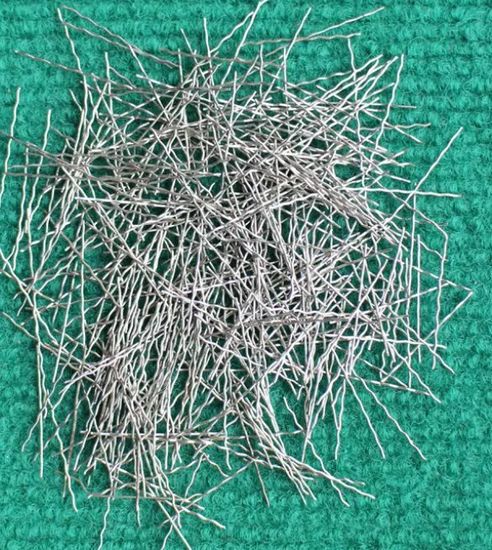
Hot Sale Steel Fiber Concrete Hot Sale Factory Steel Fiber Price
US$650.00-780.00
1 tons(MOQ)
Satisfies 1 requirement
Stainless Steel Fiber, Concrete Reinforcement for Engineering
US$6,000.00-6,600.00
1 tons(MOQ)

Satisfies 1 requirement
Stainless Steel Fibers for Concrete Increase The Application of Uhpc Architecture
US$4.50-5.20
1 kg(MOQ)

Satisfies 1 requirement
Stainless Melt Extract Metallic Steel Fiber for Concrete Reinforcement
US$1.50
1 Kilogram/Kilograms(MOQ)

Satisfies 1 requirement
Manufacturer of Stainless Steel Fiber Price for Concrete
US$4.00-5.00
1 Kilogram/Kilograms(MOQ)
Sourcing guidance for Stainless Steel Fiber Price
What are the key technical specifications to consider when sourcing stainless steel fiber?
Buyers must prioritize fiber diameter (measured in microns) and aspect ratio, as these directly impact the material's performance in filtration or reinforcement. For conductive applications, ensure the electrical resistivity meets your specific requirements. Common grades include AISI 316L for superior corrosion resistance and AISI 304 for general industrial use. Additionally, verify the tensile strength to ensure the fiber can withstand processing without breakage.
Which industries and usage scenarios are most common for this product?
Stainless steel fiber is highly versatile. In the textile industry, it is blended to create anti-static and EMI shielding fabrics. In the automotive and aerospace sectors, it is used for high-temperature filtration and noise reduction. It is also a critical component in refractory materials and concrete reinforcement to improve crack resistance and thermal shock stability.
What compliance standards and certifications should a professional buyer verify?
Ensure the supplier provides Material Test Reports (MTRs) that confirm the chemical composition aligns with ASTM or EN standards. For fibers used in hazardous environments, look for ATEX compliance regarding static dissipation. If the fiber is intended for environmental filtration, check for ISO 9001:2015 quality management certification to ensure batch-to-batch consistency.
How does the production process affect the price and quality of stainless steel fiber?
The price is heavily influenced by the manufacturing method: bundle drawing produces the finest diameters (1-20 microns) but at a higher cost, whereas melt extraction is more economical for thicker fibers used in concrete reinforcement. Fine-diameter fibers command a premium due to the complexity of the drawing process and the increased surface area per kilogram.
Cross-Border Procurement & Risk Management for Stainless Steel Fiber
How can I mitigate quality risks when purchasing stainless steel fiber from overseas?
Always request a pre-shipment inspection (PSI) by a third-party agency like SGS or Intertek. Specifically, ask for a spectrometer test to verify the nickel and chromium content, as 'price-cutting' suppliers may substitute lower-grade alloys. Ordering a small sample (1-5kg) for lab testing before committing to a bulk container is a mandatory safeguard.
What are the best strategies for negotiating price with Chinese suppliers?
Focus on volume-based pricing tiers; for stainless steel fiber, price breaks often occur at 500kg, 1 ton, and 5 tons. Since stainless steel is a commodity, negotiate based on the current LME (London Metal Exchange) nickel prices. Suggest a long-term supply agreement to lock in margins and protect against raw material price volatility.
What logistics and shipping precautions should be taken for this specific material?
Stainless steel fibers, especially fine webs or chopped fibers, are susceptible to moisture and oxidation during sea transit. Insist on vacuum-sealed plastic inner packaging and sturdy wooden crates or reinforced drums to prevent compression damage. For high-value conductive fibers, CIF (Cost, Insurance, and Freight) terms are recommended to ensure the cargo is covered against maritime risks.
How can I ensure transaction security and supplier reliability?
Utilize professional B2B platforms like Made-in-China.com, focusing on Audited Suppliers who have undergone on-site verification. Use Secured Payment services to ensure funds are only released upon confirmation of receipt. Always verify the supplier's export license and check if they have experience shipping to your specific region to avoid customs clearance delays.