
Satisfies 1 requirement
3 4 Axles 20 Tons Body Panels Small Enclosed Utility Box Fence Insulated Cage Cargo Semi Trailer
US$9,000.00-10,000.00
1 Piece(MOQ)

I have found results from10000+products and5000+suppliers aboutSmall enclosed trailer


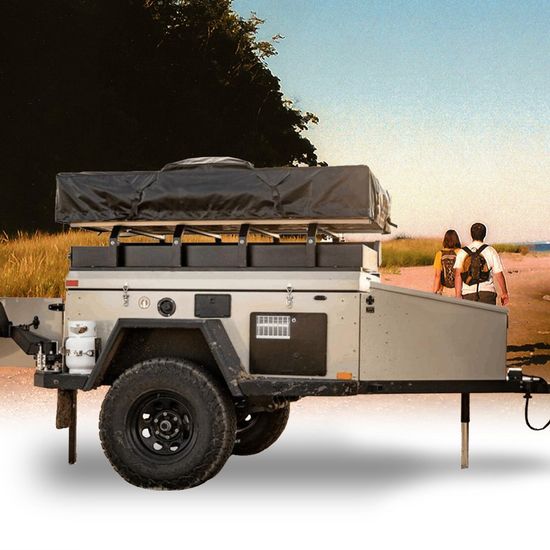


When sourcing small enclosed trailers, you must prioritize the Gross Vehicle Weight Rating (GVWR) and Payload Capacity to ensure it meets your transport needs. Look for all-aluminum frames for superior rust resistance and lighter weight, or galvanized steel for heavy-duty durability. Ensure the wall studs and floor cross-members are spaced at 16 inches on center for structural integrity. Additionally, verify the use of torsion axles over leaf springs for a smoother ride and better protection of fragile cargo.
For the US market, trailers must comply with DOT (Department of Transportation) standards and possess a valid 17-digit VIN (Vehicle Identification Number). For the EU, CE marking and e-Mark certification for lighting and axles are essential. Ensure the manufacturer provides a Certificate of Conformity (CoC) or MSO (Manufacturer's Statement of Origin), as these documents are critical for vehicle registration and road legality in the destination country.
Check for seamless aluminum roof designs to prevent leaks, as seamed roofs are prone to water ingress over time. The exterior should use screwless bonded skin (.030 gauge or higher) for a professional look and reduced corrosion points. For security, insist on heavy-duty recessed cam locks and ATP (Aluminum Tread Plate) stone guards to protect the chassis from road debris. Ensure door seals are made of automotive-grade EPDM rubber to maintain a watertight environment.
A high-quality supplier on Made-in-China.com should provide modular options such as E-track or D-ring tie-down systems for cargo stability. For specialized use cases, inquire about side access doors, interior LED lighting packages, and ramp door transitions. If the trailer is for mobile vending or workshops, verify if the supplier can integrate electrical shore power hookups and insulation during the assembly phase.
Trailers are 'high-volume' cargo, so shipping costs can be significant. To optimize expenses, use CKD (Completely Knocked Down) or SKD (Semi-Knocked Down) shipping methods, which allow more units to fit into a single 40HC container. If shipping fully assembled, utilize Ro-Ro (Roll-on/Roll-off) shipping for oversized models. Always clarify the Incoterms, preferably using FOB (Free On Board) to maintain control over the ocean freight and insurance.
The primary risk is structural failure due to poor welding or sub-standard steel. Mitigate this by requesting welding penetration test reports and photos of the chassis before the skin is applied. Another risk is non-compliance with local road laws (e.g., incorrect light wiring or braking systems). Use Made-in-China.com's inspection services to conduct a pre-shipment audit, focusing specifically on the braking system (electric vs. hydraulic) and lighting polarity.
Focus negotiations on component branding rather than just the base price. For example, insist on Dexter or Lippert axles and radial tires instead of bias-ply tires; these upgrades increase the resale value and safety of the unit. For bulk orders (5+ units), negotiate for spare tire inclusions or upgraded flooring (e.g., poly-bead or diamond plate) at no extra cost, as these have high perceived value but lower incremental costs for the factory.
Always conduct transactions through secure payment channels that offer buyer protection. Before final payment, require a video walkthrough of the specific units being shipped, including a close-up of the VIN plate and tire manufacture dates. Ensure the contract includes a warranty clause of at least 1-3 years on the structure, and confirm that the supplier can provide replacement parts (like fenders or lights) via express courier if damage occurs during transit.