Satisfies 1 requirement
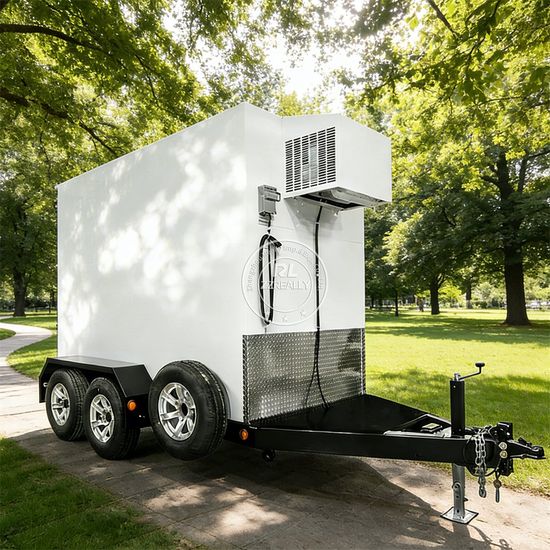
Custom Design Freezer Truck Reefer Trailer Reliable Mobile Refrigerated Cargo Trailer for Cold Chain Distribution
US$3,000.00-6,500.00
1 Piece(MOQ)

I have found results from40000+products and10000+suppliers aboutRefrigerated cargo trailer
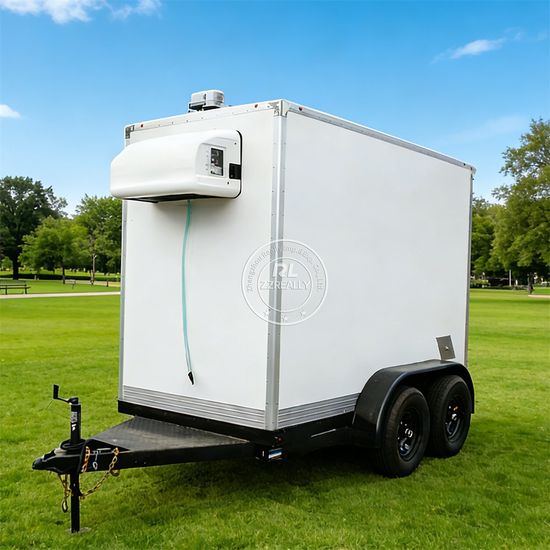


When selecting a refrigerated trailer, the insulation thickness and material are paramount. Look for high-density polyurethane foam (PU) with a thickness of at least 75mm to 100mm to ensure thermal efficiency. The cooling unit (reefer) must be matched to the trailer's volume and the target temperature; for frozen goods, ensure the unit can maintain -18°C to -25°C, while chilled goods require 0°C to 4°C. Always verify the K-value (heat transfer coefficient); a lower K-value indicates better insulation performance and lower fuel consumption for the cooling unit.
The chassis should be made of hot-dip galvanized steel to prevent corrosion from road salt and moisture. For the interior lining, Food-Grade Glass Reinforced Plastic (GRP) or stainless steel is recommended for hygiene and ease of cleaning. Ensure the flooring is anti-slip aluminum T-bar or checkered plate, which allows for better airflow under the cargo. Additionally, check for heavy-duty door hardware and EPDM rubber seals to prevent thermal leakage during transit.
B2B buyers must ensure the trailer complies with ATP (Agreement on the International Carriage of Perishable Foodstuffs) standards, which classifies trailers based on their cooling capacity. For the North American market, DOT (Department of Transportation) and NATM certifications are essential, while European markets require CE marking and e-Mark for road legality. If the trailer will be used for food transport, verify that all interior materials are FDA or HACCP compliant to meet food safety regulations.
Confirm whether the cooling unit is independent (diesel-powered) or non-independent (vehicle-engine powered). For long-haul cross-border transport, independent units from reputable brands like Thermo King or Carrier are preferred due to their global service networks. Ensure the electrical system is compatible with your region (e.g., 110V/220V/380V standby power) and that the controller supports real-time GPS temperature monitoring and data logging for cold chain transparency.
The biggest risks include shipping damage to the sensitive cooling unit and non-compliance with local road registration laws. To mitigate this, require the supplier to provide a pre-shipment inspection (PSI) report and ensure the reefer unit is securely braced. On Made-in-China.com, you can utilize secured payment services to ensure funds are only released after the bill of lading is confirmed and the product meets the agreed-upon technical specifications.
Negotiate for a comprehensive warranty period (typically 1-2 years) that covers both the trailer structure and the cooling unit. Since shipping the entire trailer back for repairs is unfeasible, insist on a spare parts kit (seals, filters, sensors) to be included in the initial shipment. Ask the supplier if they have authorized service partners in your destination country or if they provide video-based technical support for local mechanics.
For large trailers, Ro-Ro (Roll-on/Roll-off) shipping is the safest method to prevent structural stress, though it can be more expensive. If shipping via 40HQ container, the trailer may require partial disassembly (e.g., removing wheels or the reefer unit). Ensure the supplier uses marine-grade protective wax to prevent salt-air corrosion during the sea voyage, and clarify the Incoterms (preferably CIF or DAP) to define exactly where the risk transfers.
Prioritize Audited Suppliers on Made-in-China.com, as these factories have undergone third-party verification of their production facilities. Request factory videos showing the foaming process (to ensure no air gaps in insulation) and temperature pull-down test records, which prove the trailer can reach and maintain its rated temperature in a controlled environment.