
Satisfies 1 requirement
Faster Operation Commercial Complex Indoor Outdoor Cafe Use Portable Cabin Tiny Prefab Cabin Home
US$3,599.00-9,999.00
1 Piece(MOQ)

I have found results from100000+products and40000+suppliers aboutPrefab cabin


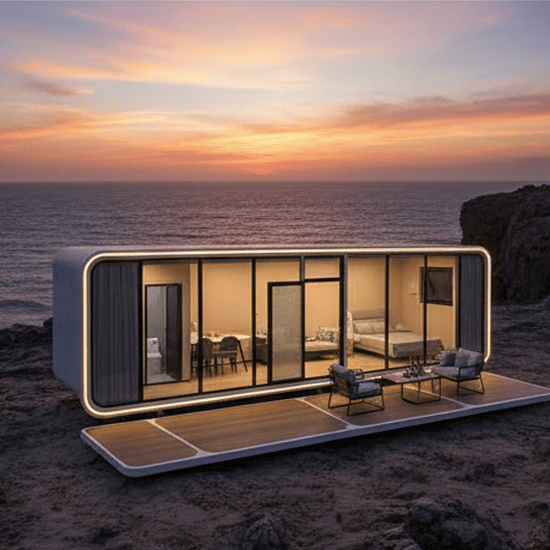


When sourcing prefab cabins, prioritize structural integrity and material durability. Ensure the main frame uses galvanized steel to prevent corrosion, especially for coastal or humid environments. For insulation, look for polyurethane (PU) or rock wool sandwich panels with a thickness of at least 50mm to 100mm to ensure thermal efficiency. Additionally, verify that the floor loading capacity meets your specific use case, typically requiring a minimum of 250kg/m² for residential use.
Compliance is critical for legal installation. You must ensure the supplier provides CE marking for the European market or meets local building codes (such as IBC in the US or AS/NZS 1170 in Australia). Electrical systems must be pre-installed according to UL, ETL, or SAA standards depending on the destination country. Furthermore, check for ISO 9001 certification of the manufacturing facility and fire resistance ratings (Class A or B1) for all wall and roofing materials.
A high-quality prefab cabin should have a service life of 20-30 years. Ask for test reports regarding wind load resistance (typically Grade 10-12) and snow load capacity. The exterior paint should be fluorocarbon (PVDF) or powder-coated to resist UV degradation and fading. For cabins intended for extreme climates, ensure the windows are double-glazed tempered glass with broken bridge aluminum frames to prevent thermal bridging.
Professional suppliers on Made-in-China.com should offer modular flexibility, allowing for the expansion of units. Verify if they provide CAD/3D design support for interior layout customization. It is also essential to confirm if the cabin comes with integrated plumbing and electrical 'plug-and-play' systems, which can reduce on-site installation costs by up to 60%.
Prefab cabins are bulky; therefore, shipping costs can significantly impact the total budget. Most units are shipped as Flat-Pack (SOC) to save space or as fully assembled units in 40ft HQ containers. Ensure the supplier uses heavy-duty protective packaging and moisture-absorbent materials to prevent rust during sea transit. Always clarify the Incoterms (FOB vs. DDP) to understand who handles the complex unloading process at the destination.
To mitigate risk, utilize secured payment services provided by reputable platforms like Made-in-China.com. It is highly recommended to hire a third-party inspection agency (like SGS or Intertek) to conduct a pre-shipment inspection. This inspection should focus on waterproof testing (hose test), electrical circuit safety, and dimensional accuracy against the approved blueprints before the final balance is paid.
Customs authorities often scrutinize prefab cabins for wood packaging materials (WPM); ensure all wooden components or pallets are IPPC heat-treated and stamped. Additionally, provide a detailed HS Code classification (typically 940690) to avoid incorrect duty applications. Be aware of anti-dumping duties that may apply to steel structures in certain regions and ensure all Certificates of Origin are prepared to leverage trade agreements.
Negotiate based on Total Cost of Ownership (TCO) rather than just the unit price. Request a tiered pricing structure where the price drops by 10-15% for orders exceeding 5 units. Ask for a spare parts kit (extra sealants, touch-up paint, and fasteners) to be included at no extra cost. Finally, negotiate a warranty period of at least 2-5 years on the main structure to ensure long-term supplier accountability.